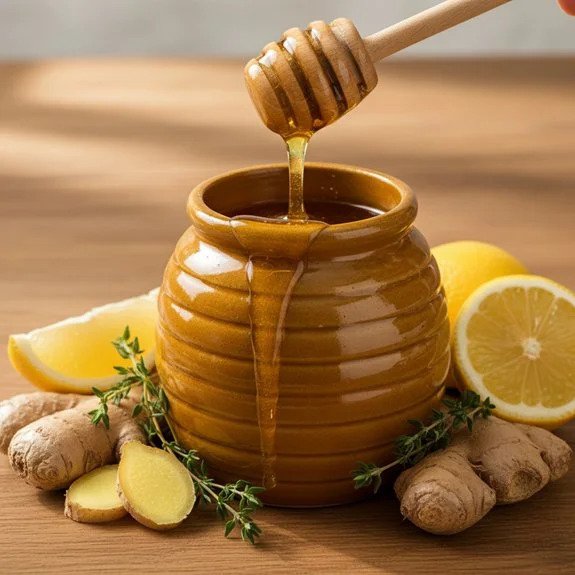
How to Use Honey as a Natural Cough Remedy
Got a cough? Discover how honey’s natural soothing properties can ease your throat—learn the best ways to use it safely and effectively.
October 20, 2025 •
18 min read
Wondering how honey can help your cough? Just take a teaspoon or two of **raw honey**, especially before bed, to coat and **soothe your throat**’s irritation. Mixing it with warm water or herbal teas like chamomile or ginger can ramp up its **calming effects**. Remember, stick to raw honey for the best results and avoid giving it to babies under one year. Curious about how to pick the perfect honey or boost its soothing powers? Keep exploring to find out.
## Key Takeaways
- Take one to two teaspoons of raw honey before bedtime to soothe throat irritation and reduce coughing frequency naturally.
- Mix honey with warm water or herbal tea like chamomile or ginger for added throat comfort and hydration.
- Choose raw, unprocessed honey for maximum enzymes and antioxidants that support throat soothing and immune support.
- Avoid giving honey to children under one year old due to potential bacterial risks and monitor for allergies.
- Store honey sealed in a cool, dry place to preserve its healing properties and prevent crystallization.
## Benefits of Honey for Cough Relief
You might have heard that honey is a **miracle cure for coughs**, but does it really live up to the hype? When it comes to **honey health benefits**, the truth is a bit more nuanced. Honey offers a range of natural compounds that can support your **immune system**, but it isn’t a guaranteed fix for every cough. Instead, think of honey as a **tasty helper** that might ease your discomfort. Plus, exploring **honey flavor profiles** can be a fun way to enjoy its variety—from floral to woody notes, each type brings a unique twist. So, while honey isn’t a magical cure-all, it can be a sweet addition to your **self-care routine**. You have the freedom to experiment with different honeys and decide what works best for your body and taste buds. Isn’t it empowering to know that natural options like honey exist, even if they’re not perfect remedies?
## How Honey Soothes the Throat
Ever wonder why honey feels so **soothing** when you have a sore throat? It’s not just sweet—honey’s natural **anti-inflammatory properties** help calm the irritation, while its thick texture coats and moisturizes your throat. So, next time you’re coughing, you might find that a spoonful does more than just taste good.
### Anti-inflammatory Properties
Although many people believe honey has strong **anti-inflammatory effects** that **soothe a sore throat**, the truth is a bit more complicated. You might expect honey compounds to directly reduce inflammation, but **science hasn’t confirmed** significant anti inflammatory effects from honey alone. So, does that mean honey doesn’t help your throat? Not exactly. While honey’s anti inflammatory effects may be limited, its unique blend of sugars and natural substances still offers comfort when you’re coughing or irritated. Think of honey as a **gentle companion**—not a miracle cure—helping your throat feel better in its own way. Isn’t it freeing to know that even **natural remedies** come with their own quirks and limits? Understanding this keeps your expectations real and your choices smart.
### Coating and Moisturizing
A **soothing coat** can make all the difference when your throat feels raw from coughing. Have you ever noticed how **honey clings gently** to your throat, creating a **natural barrier**? That’s one of the honey benefits that often goes unnoticed. By coating the delicate tissues, honey locks in moisture, preventing irritation and dryness that fuel persistent coughs. Think of it as a soft shield, calming your throat and giving it space to heal. This **moisturizing effect** supports throat health by reducing the scratchiness that triggers coughing fits. So next time you’re battling a tickle, why not let honey do some of the hard work? It’s nature’s way of offering comfort, allowing you to breathe easier and **reclaim your freedom** from that nagging cough.
## Choosing the Right Type of Honey
When it comes to using honey for your cough, not all honey is created equal. Have you ever wondered why **raw honey** often gets all the praise over **processed versions**? Plus, the flowers bees visit can actually change how effective your honey is at soothing that scratchy throat.
### Raw vs. Processed Honey
Since not all honey is created equal, you might wonder whether raw or processed honey makes a better cough remedy. **Raw honey benefits** include rich enzymes, antioxidants, and natural compounds that can **soothe your throat** and boost your immune response. It’s like nature’s own little medicine chest, straight from the hive. On the flip side, **processed honey drawbacks** are worth considering. Heating and filtering can strip away those helpful nutrients and enzymes, leaving you with a product that’s sweeter but less potent for **healing**. So, if freedom to choose means getting the most from your honey, raw is your go-to. Why settle for a sugar substitute when you can have the real, healing deal? Your cough—and your **taste buds**—will thank you.
### Floral Source Importance
Picking the right honey isn’t just about raw versus processed—where the honey comes from plays a big role too. You see, floral diversity and nectar sources directly affect honey's flavor and potential benefits. Different flowers offer unique compounds that can soothe your cough better. Ever wondered why manuka honey gets so much hype? It’s all about its unique nectar source. Here’s a quick guide:
| Honey Type | Nectar Source | Flavor Profile |
|------------|---------------------|----------------------|
| Clover | Clover flowers | Mild, sweet |
| Manuka | Manuka bush | Earthy, herbal |
| Wildflower | Various wild plants | Complex, floral |
Choosing honey from diverse floral sources means you get a richer mix of natural goodness—perfect for calming that cough naturally. Why settle for less?
## Recommended Dosage for Cough Treatment
You might be surprised to learn that there isn't a **one-size-fits-all recommended dosage** for using honey to **soothe a cough**. You get to decide what feels right, but generally, a teaspoon or two before bed can work wonders. Want to switch things up? **Honey alternatives** like agave or maple syrup are options, but remember, **dosage adjustments** might be needed since their sweetness and texture differ. How much should you take? It depends on your taste and how your body responds.
Here’s what you can consider:
- Start with a small amount to see how it affects your cough.
- Adjust the dosage based on relief and personal preference.
- Use honey sparingly if you’re **managing blood sugar** or allergies.
- Trust your instincts—freedom means tailoring remedies to you.
Isn’t it great to have a **natural remedy** you can personalize? You’re in control here!
## Honey and Warm Water: A Simple Remedy
Few things feel as comforting as a **warm drink** when you’re battling a cough, and mixing **honey with warm water** is a classic go-to for many. Have you ever wondered why this simple combo feels so soothing? Warm water helps ease **throat irritation** and keeps you hydrated, while honey’s natural properties coat your throat, reducing that pesky tickle that sparks coughing fits. The honey benefits don’t stop there—it’s also known for its **antimicrobial traits**, which can help you feel better faster. Plus, it’s a pure, natural option that doesn’t come with a long list of side effects. So, why not reach for a cup of warm water mixed with a spoonful of honey next time your throat feels raw? It’s an easy, gentle way to reclaim your comfort and freedom from coughing. Who knew that such a **simple remedy** could pack such a punch?
## Honey With Lemon for Enhanced Relief
Although honey alone works wonders, adding lemon can take your **cough relief** to the next level. Have you ever wondered why this combo feels so soothing? The **natural sweetness** of different honey types smooths your throat, while lemon varieties bring a zesty kick packed with **vitamin C** to boost your immune system. Together, they form a dynamic duo that **calms irritation** and promotes healing.
Why stick to plain honey when you can:
- Enjoy the bright, invigorating taste of fresh lemon juice mixing with rich honey
- Choose from a variety of honey types, like wildflower or clover, to suit your mood
- Harness lemon’s natural antiseptic properties to fight infection
- Feel empowered by using simple, **natural ingredients** for your health
## Using Honey With Herbal Teas
Looking for the best **herbal teas** to **soothe your cough**? You’ll want to pair honey just right—too much can overpower the flavor, but too little won’t do the trick. Ready to mix up some tasty combos that actually help you feel better?
### Best Herbal Tea Choices
When you’re battling a **cough**, choosing the right **herbal tea** can feel like a mini science experiment—except the results actually **soothe your throat**. You want a flavor profile that comforts yet frees you from irritation. Why settle for one when you can explore? Here are some herbal teas that pair perfectly with **honey’s natural sweetness**:
- **Chamomile**: Gentle and calming, it eases throat discomfort and helps you relax.
- **Peppermint**: Invigorating with a cooling effect that clears your airways.
- **Ginger**: Spicy and warming, it battles inflammation and boosts immunity.
- **Lemon balm**: Citrusy and bright, it lifts your spirits while soothing coughs.
Experiment with these blends—you might just find your new freedom flavor. Ready to brew?
### Honey Dosage Tips
A **tablespoon of honey** can work wonders when you add it to your **herbal tea**, but how do you know if that’s the right amount for you? Honey applications vary widely, so **listening to your body** is key. Some folks find a teaspoon enough to soothe their throat, while others prefer a bit more, especially if their cough is stubborn. Don’t be afraid to experiment with **dosage variations**—after all, freedom means choosing what feels best! Just remember, too much honey can make your tea overly sweet, masking the herbal benefits. Start small, then adjust until you strike the perfect balance. That way, you get the **natural relief** you want without overwhelming your taste buds or your health.
### Combining Flavors Effectively
Combining just the right flavors in your herbal tea can turn a simple cup into a **soothing remedy** that feels like a warm hug on a rough day. When you add honey, **mastering flavor pairing** and taste balance becomes key. You want the honey’s **natural sweetness** to complement, not overpower, your tea’s herbal notes. Ever tried chamomile with a drizzle of honey? It’s like a **gentle lullaby** for your throat. Think about what excites your palate and soothes your soul.
- A spoonful of honey brightens mint tea’s cool freshness
- Ginger tea with honey offers a **spicy-sweet kick** to calm coughs
- Lavender’s floral hints blend beautifully with honey’s mellow taste
- Lemon and honey unite for a zesty, comforting sip
Ready to craft your perfect cup?
## Mixing Honey With Ginger for Coughs
Although many people swear by mixing honey with ginger to soothe coughs, you might be surprised to learn that this combo doesn’t actually hold up as a **reliable remedy**. Sure, **honey benefits** are well-documented—it soothes the throat and calms cough reflexes. **Ginger properties**, like its anti-inflammatory effects, sound promising too. But when combined, there’s no strong evidence that they work better together against coughs than honey alone.
## Honey and Turmeric Combination for Immunity
Ever thought about boosting your **immunity** with a simple kitchen combo? Honey and turmeric each bring powerful benefits, and when you mix them right, they can work together to help keep you healthy. Ready to learn how to prepare this **golden duo** for the best effect?
### Turmeric's Immune Benefits
You might have heard that mixing honey with turmeric creates a powerful **immune booster**, but does it really work that way? While turmeric is praised for its **turmeric benefits**, including some immune support, it doesn’t magically transform when combined with honey. Turmeric contains curcumin, an antioxidant that may help your body fight inflammation and support your immune system. However, the idea that honey and turmeric together create a **super immune shield** is more myth than fact.
Still, turmeric can be a great **natural ally** if you want to feel freer and healthier. Imagine:
- Facing fewer sniffles during cold season
- Enjoying a natural way to support wellness
- Reducing inflammation without pills
- Embracing simple, **powerful herbs** in your routine
### Honey-Turmeric Preparation Tips
If you’re curious about **mixing honey and turmeric** to **boost your immunity**, it helps to know how to prepare the combination properly. First, pick the right honey type—raw or Manuka honey works best because they retain natural enzymes and antioxidants. Next, remember **turmeric benefits** come from curcumin, which isn’t very water-soluble, so mixing turmeric powder with a bit of **warm water or milk** before adding honey can help your body absorb it better. Don’t boil the mixture; heat can destroy honey’s goodness. Stir gently and enjoy it fresh. Wondering why not just toss them together? Proper preparation maximizes the **immune-boosting effects**, making your natural remedy way more effective. Ready to give your cough remedy a powerful, golden upgrade?
## When to Avoid Using Honey for Cough
Although honey seems like a **natural fix** for many coughs, there are moments when it’s best to hold off on using it. You might wonder, “Is honey always safe?” Not quite. If you’re looking for freedom from discomfort but face certain situations, you’ll want to evaluate honey alternatives or other cough remedies instead.
Here’s when to avoid honey for your cough:
- If you’re **allergic to pollen** or bee products, honey can trigger reactions.
- If your cough is due to a **serious infection**, relying solely on honey might delay proper treatment.
- If you’re on **medications that could interact** with natural substances, caution is key.
- If you experience **worsening symptoms**, honey won’t be your hero anymore.
Knowing when to pause and explore other options empowers you to take control of your health without unnecessary risks. After all, freedom means making **informed choices**, right?
## Honey for Children: Safety Considerations
While honey can be a soothing option for many adults, it’s a different story when it comes to children. You might wonder, “Is honey safe for my little one?” The answer is, not always. Honey isn't recommended for children under one year old because their **developing digestive systems** can’t handle potential bacteria that honey may carry. Beyond that age, you still want to be cautious. Have you checked for **honey allergies**? It’s rare but possible, so start with a tiny amount to see how your child reacts. Also, keep an eye on **honey dosage**—too much can cause **unnecessary sugar spikes** or tummy troubles. Using honey responsibly means giving kids just enough to **calm their coughs** without overdoing it. So, while honey feels like a **natural fix**, it requires some respect and careful attention when it comes to children. After all, freedom includes making smart choices, right?
## Potential Allergies and Side Effects of Honey
Since honey comes from nature, you might assume it’s completely safe for everyone, right? Well, not exactly. While honey is generally safe for most people, some can face **honey allergies** or experience **honey side effects**. These reactions aren’t common, but they do happen, and knowing the signs sets you free from unexpected trouble.
Honey allergies might make you:
- **Feel itchy or swollen** around your mouth
- Break out in hives or get rashes
- Experience sneezing or a runny nose
- Suffer **breathing difficulties** in rare cases
If you’ve never tried honey before, test a small amount first. Also, if you have pollen allergies, be cautious since honey can contain pollen traces. Side effects beyond allergies are rare but watch out for **upset stomach** or diarrhea. So, while honey offers freedom from **cough discomfort**, respect your body’s signals—it’s the best way to stay safe and healthy!
## How Often to Use Honey for Cough Relief
When it comes to using honey for **cough relief**, how often you take it matters more than you might think. You don’t want to overdo it, even though honey feels like a natural, gentle fix. Generally, taking a **teaspoon of honey** two to three times a day is enough to soothe your throat and calm that pesky cough. But remember, the **quality of your honey** plays a role here. Good honey sourcing guarantees you get pure, unprocessed honey packed with natural benefits. And once you’ve got your jar, **proper honey storage** is key—keep it sealed tight in a cool, dry place to preserve its healing properties. So, instead of mindlessly spooning it down all day, trust a **moderate routine**. After all, freedom means making smart choices, right? How often you enjoy your honey remedy can make all the difference in feeling better faster.
## Tips for Maximizing Honey’s Effectiveness
To get the most out of honey as a **cough remedy**, you’ll want to pay attention to how and when you take it. Timing matters—honey works best **before bedtime** when your throat needs soothing the most. Also, avoid giving honey to children under one year old, as **safety comes first**. If you’re looking for variety, natural sweeteners like maple syrup or agave can serve as **gentle honey alternatives**, but they may not soothe as effectively.
> Honey soothes best before bedtime; avoid for infants under one year; try maple or agave for mild alternatives.
Want to maximize honey’s power? Try these tips:
- Take a spoonful slowly, savoring the sweetness as it coats your throat.
- Mix honey with warm (not hot) tea to **preserve its natural enzymes**.
- Use raw, unprocessed honey for the **most benefits**.
- Avoid combining honey with acidic drinks that may reduce its soothing effect.
Ready to reclaim your freedom from pesky coughs with nature’s sweet helper? Give these tips a shot and feel the difference!
## Frequently Asked Questions
### Can Honey Replace Prescribed Cough Medicines Entirely?
No, honey can't fully replace prescribed cough medicines, but it offers some great honey benefits you might appreciate. It's a **natural cough alternative** that **soothes your throat** and can reduce coughing fits, making it a handy, gentle option. Still, if your cough is **severe or persistent**, relying solely on honey might not cut it. Why not try honey alongside other treatments, keeping your freedom to choose while staying safe?
### Does Honey Interact With Other Medications?
Did you know about 2% of people have **honey allergies**? If you’re one of them, mixing honey with medications could trigger reactions. Generally, honey doesn’t interfere with most drugs, but it might affect **medication absorption** in rare cases. Wondering if it’s safe to combine? Always **chat with your doctor**—you want freedom to heal without surprises. So, while honey’s sweet, don’t let it complicate your meds or health journey!
### How Should Honey Be Stored to Maintain Its Medicinal Properties?
You should store honey in **airtight storage containers** to keep its magic intact. Why? Because **exposure to air and moisture** can mess with its healing powers. Keep it at **ideal temperatures**—room temperature is perfect, not too hot, not too cold. Stashing it in the fridge? That just makes it crystallize, which isn’t harmful but can be annoying. So, treat your honey right, and it’ll keep working wonders whenever you need it.
### Are There Specific Types of Coughs Honey Is Ineffective Against?
Think of honey as a trusty shield, but not one that defends every battle. If you’re dealing with **dry coughs**, honey often soothes and coats the throat, easing irritation. However, **allergic coughs**? Honey might not help much there since those are triggered by immune reactions, not irritation. So, when freedom from coughing feels trapped, ask yourself: Is honey your ally or just **sweet comfort**? Sometimes, you need more than a simple remedy.
### Can Honey Be Used for Coughs Caused by Chronic Conditions?
You can try honey for **chronic coughs**, but it’s not a guaranteed fix since those often need medical attention. **Natural remedies** like honey soothe your throat and might ease symptoms, but chronic conditions usually demand more than just sweet relief. Ever wonder if a spoonful of honey alone can tame a stubborn cough? It’s worth a shot, but don’t skip **consulting a doctor** if your cough lingers or worsens.
## Conclusion
Feeling **scratchy throat** or a persistent cough? Why not reach for honey—nature’s sweet, **soothing remedy**? You can sip it straight, mix it with warm water, or drizzle it over tea. Just remember to choose the right honey, use the right amount, and consider safety, especially for kids. Ready to **calm that cough** naturally? Give honey a try—it's simple, effective, and a little bit delicious. Who knew relief could taste so sweet?
Related Searches in TX
- raw honey Bryan Texas
- Hatch Honey Company Gainesville
- best apiaries selling raw honey Gainesville TX
- best local honey Austin
- where to buy local honey in melissa texas
- Anna TX beekeepers
- Bryan TX beekeepers
- oral immunotherapy honey mechanism
- difference between raw and processed honey
- best apiaries Palestine Texas
- Texas cedar pollen allergy
- buy Texas honey directory
- raw honey Alamo Heights Texas
- honey farms near Anna Texas
- Anderson County Texas raw honey
- local Texas honey apiaries
- raw honey sellers Baird Texas
- what makes melissa farmers market honey special
- where to buy local honey in Bryan TX
- warne bee farms honey melissa farmers market
- buy local honey Collin County
- north texas wildflower honey benefits
- where to buy raw honey in Fort Worth TX
- buy raw honey near me
- raw honey Gainesville Texas
- where to buy raw honey in Aledo TX
- local honey Anderson County TX
- raw honey Fort Worth Texas
- Alvin TX beekeepers
- where to buy raw honey Anderson County TX
- Alamo Heights TX beekeepers
- buy raw honey near dallas fort worth tx
- local beekeepers Baird
- unfiltered honey vs supermarket honey in anna tx
- Bandera County beekeepers
- buy honey from farm Arlington
- local apiaries selling honey collin county
- authentic local honey farms near dallas tx
- Texas wildflower honey near me
- honey farm Arlington TX
- Pete Glasser honey Texas
- where to buy local honey in Canton TX
- where to buy raw honey in Bartonville TX
- buy raw honey Arlington TX
- North Texas local honey
- cedar fever treatment Texas
- buy local honey Palestine
- raw honey sellers Adkins Texas
- where to buy local honey in Blue Ridge TX
- how does local honey help allergies texas
- Cross Timbers Honey Parker County
Trending Searches in TX
- north texas wildflower honey seasonal harvesting
- Maxwell Family Bees Anderson County
- Alvin TX honey farms
- honey for allergies Bryan TX
- family run honey farms Texas
- honey desensitization protocol
- honey farmers markets waco tx
- authentic raw honey Texas
- artisan honey Central Texas
- melissa tx local honey festivals
- authentic Anna Texas honey suppliers
- unfiltered honey Anna TX
- Cornerstone Honey Bees Bryan
- north texas honey antioxidant research
- best raw honey for allergies Texas
- family owned bee farms Texas
- Crooked Creek Honey Farm Anna
- north texas allergy relief honey
- support local beekeepers Bartonville
- best farmers markets dallas tx honey
- Coplin Bee Farms Alvin
- Dovetail Creek honey Weatherford
- support local beekeepers Arlington
- vandenberg farm honey adkins
- local honey trends in collinsville texas
- East Texas local honey delivery
- honey for cedar pollen sensitivity
- Anderson County farmers market honey
- sustainable beekeeping Bryan
- texas allergy season 2024
- unfiltered honey Texas
- seasonal honey harvest in north texas
- ordering honey online Blue Ridge TX
Top Recommendations in TX
- north texas apiary liability insurance
- fresh Texas honey online
- support local beekeepers Texas
- support local Anna businesses
- Anderson County pine forest honey
- online honey ordering in denton texas
- Parker County honey producers
- anti-inflammatory compounds in honey
- best honey shops Bryan TX
- raw honey delivery Arlington
- benefits of raw honey dallas area
- North Texas wildflower honey
- best place to buy honey Alvin
- fresh raw honey bexar county
- JC's Honey Bees classes
- buy Texas honey online
- honey farm directory Anna
- north texas honey pollen preservation
- buy local honey Texas
- natural honey allergy relief Texas
- best local honey in Van Zandt County
- Texas oak pollen allergy treatment
- sustainable beekeeping practices in north texas
- Master Beekeeper Texas A&M
- cold pressed honey Fort Worth
- immune system support with local honey texas
- fresh raw honey delivery
- Texas ragweed allergy remedies
- fresh wildflower honey Aledo
- sustainable beekeeping Texas
- north texas wildflower honey health
- buy Texas honey directory
- effects of pasteurization on honey enzymes texas